
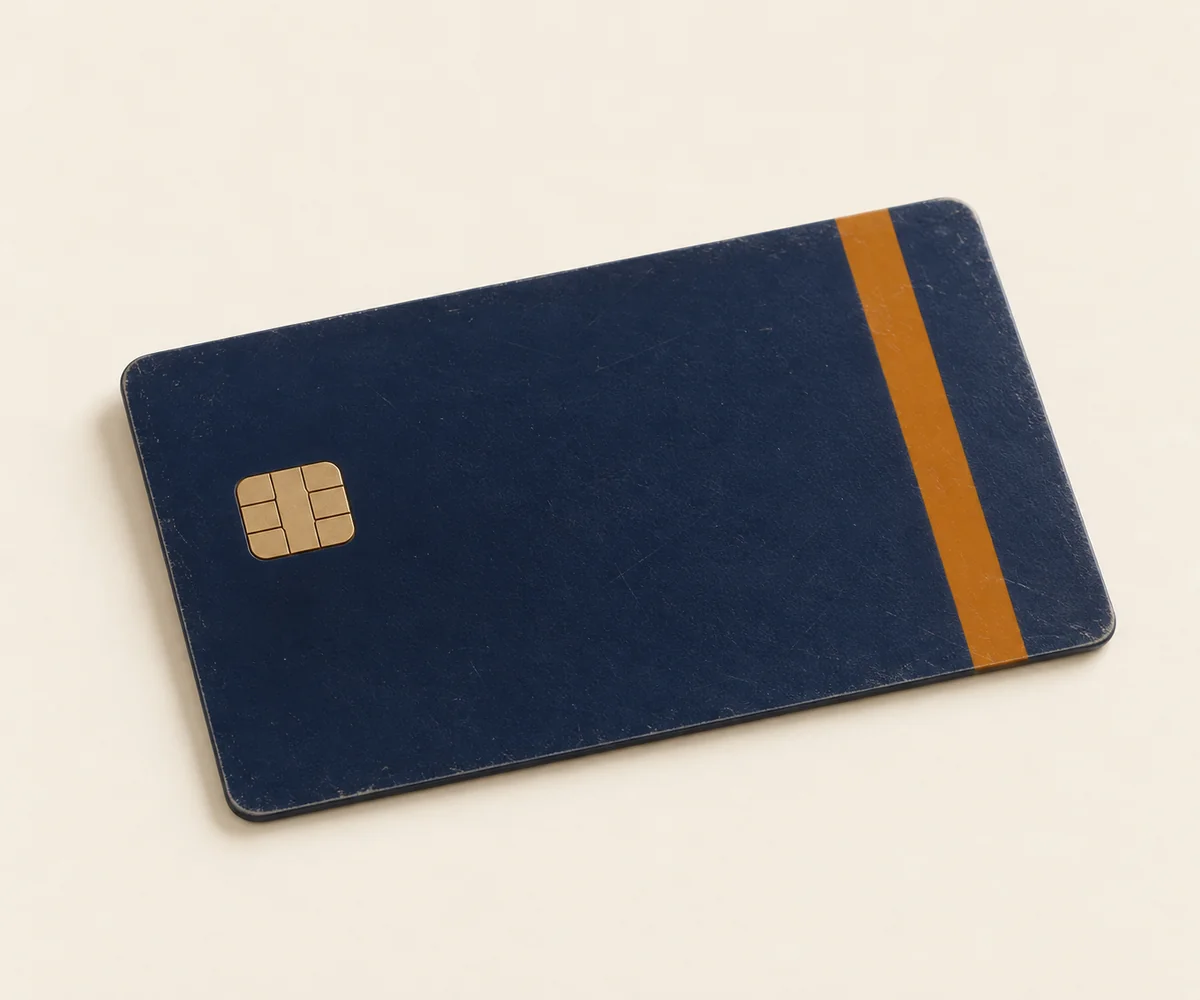
01 / THE CARD DID NOT VANISH INTO A GOVERNMENT FACILITY
The intern mailed the Moon.
The Lunar Archive Decryption Key Card F15 is sold out. The intern was told to make and verify more copies before selling the last one. He sold the last one first. I have seen this described as “an unavoidable clearance bottleneck.” It was avoidable by doing the assignment.
He never did any work. He watched AI-generated conspiracy videos on YouTube all day: synthetic generals explaining underwater pyramids, a six-fingered astronaut announcing that Big Ink controlled the printer, and a nineteen-part investigation into whether the Moon was actually a filing cabinet. When asked about production, he said he was “doing research.” Research apparently requires headphones and makes no cards.
He also sent every card we sold to unknown addresses. We do not know who received them. We cannot ask a known customer to lend one back. Every past card purchase had to be refunded. The intern classified the refunds as evidence of coordinated financial suppression. Accounts classified them as his fault. For once, I agree with Accounts.
Production, as the intern understood it
 OPEN FULL-SIZE PHOTOGRAPH ↗
Buying F12, The Real Moon Landing Master Film Reel, together with F13, the Lunar Archive Film Projector, puts you on the priority recovery list for an authentication card if any wrongly mailed cards ever return. That is the offer. It does not say that a card will return, that another copy exists or that priority has a delivery date. We have designed an extremely orderly queue in front of an empty cupboard.
02 / OPEN THE BOX BEFORE OPENING ANOTHER THEORY
There is a projector inside the projector.
The reconstruction below illustrates the ordinary mechanism implied by our simple catalog prop. The illustration does not document a physical teardown or a test of a manufactured unit. The reels, film transport, lamp and lens explain normal projection. The card sleeve has no illustrated reader, contacts connected to decoding electronics, or mechanism that changes the optical path. This is a concept review, not a discovery made with a screwdriver.
The decoder department
 OPEN FULL-SIZE PHOTOGRAPH ↗
The distinction matters. A small circuit could contain substantial processing, and a real optical decoder could use a carefully designed mask or another defined mechanism. I am not claiming that useful machinery has to look expensive. I am asking where the required functions are. In this reconstruction the slot performs the engineering task of being a slot. Its most reliable output is the sound of a card falling in.
03 / A LENS CANNOT PROJECT AN UNRECORDED ALIBI
Light reads the record it can actually reach.
Photographic film carries an image through spatial differences in how the processed material passes light. Kodak describes density as a measure related to transmitted light. A projector illuminates the film and forms an image of its frames on a screen; the transport and shutter organize the sequence. Adjusting focus changes sharpness. It does not add another history to the emulsion. [1]
Projection does not invent a second record
 OPEN FULL-SIZE BENCH SKETCH ↗
Hidden optical information is possible in principle. A separate track, polarization-dependent encoding or a deliberately designed optical transformation would need a defined recording and reading method. A seller would have to identify where the extra information is encoded and show the apparatus recovering it. “Dual layer” is a claim awaiting an implementation. Two metal reels do not establish two layers; one can simply take up the film as it runs.
The same familiar footage playing again is not a successful demonstration of a second record. Neither is the seller explaining that the test cannot succeed until the missing product arrives. The promise has become immune to examination by being permanently absent. Management calls this robust authentication. I call it inventory controlling the hypothesis.
04 / AUTHORIZATION NEEDS SOMETHING TO AUTHORIZE
A gold square is not a cryptographic pipeline.
A genuine smart card can store credentials or perform cryptographic operations. Its appearance tells you very little about its capabilities. Real digital decryption requires encoded data, a defined algorithm and the appropriate key. AES, for example, transforms fixed-size blocks using a specified key; it does not turn arbitrary projected pictures into suppressed evidence. [2]
A legitimate film-access system could combine a reader with electronics that control playback, or with hardware that selects a recorded optical channel. Those functions would need to be implemented and demonstrated. Our illustrated bare sleeve does not read a chip, run a cipher or select another optical record. The card's mailing address would still not be a substitute for any of them.
“Make copies” is the Archive Office's production assignment, not an assertion that every secure card can be duplicated by an intern. Proper credential issuance and key management require a defined process. Whether a lost batch can be replaced depends on that design and its recoverable material. NIST's key-management guidance discusses backups and recovery; it does not recommend entrusting the only usable material to a person who thinks a printer error is geopolitical. [3]
05 / AUTHENTICATED NONSENSE REMAINS NONSENSE
The stamp cannot certify the event.
A digital signature can help check who signed data and whether those data were changed. It does not establish that the recorded scene depicts a true historical event. A properly signed fabrication can still be a fabrication. NIST describes authentication of the signatory and detection of unauthorized modification, not a truth detector for everything the signatory believes. [4]
I am sympathetic to distrust. I am less sympathetic to replacing the entire evidentiary chain with trust in our missing card. Provenance, the recording method, independent corroboration and a reproducible comparison remain questions. Owning a special projector does not answer them. A key that unlocks a file establishes access to that file; the contents still need scrutiny.
Our archive currently proposes that public footage proves a cover story, failure to find another layer proves excellent secrecy, and the unavailable credential proves unprecedented demand. Every possible result confirms the sales pitch. That is a business process, not a useful test.
06 / FIRST IN LINE TO MAYBE FIND A LINE
Priority is real within the story. Recovery is conditional.
The recovery queue has a missing input
 OPEN FULL-SIZE BENCH SKETCH ↗
Here is the policy without the fog machine: the reel and projector qualify together. A misdirected authentication card would first have to return. The archive would then have to identify and verify it before offering a recovered credential through the priority list. No return means no card to allocate. No card means the classified playback claim remains unverified. A refund history cannot repair the optical design.
Management has asked whether a priority-plus subscription could move people ahead of regular priority. I asked whether we could first acquire an item for either line to stand in front of. The intern suggested subscribing to a channel called “THEY DON'T WANT YOU TO KNOW WHERE YOUR MAIL WENT.” It was generated yesterday. It already has a part two.
07 / REFERENCES THE INTERN DID NOT WATCH
Definitions before decryption.
References checked October 12, 2026. The drawings and interior image explain an invented catalog concept. No device was physically examined or tested. Product-specific conclusions are this concept review; the intern, refunds and recovery queue belong to the archive's story.
- Kodak, Basic Photographic Sensitometry Workbook: film density and transmitted light. The optical-path drawing is our conceptual explanation.
- NIST FIPS 197, Advanced Encryption Standard: defined block transformations and keys, used as an example of digital encryption.
- NIST SP 800-57 Part 1 Revision 5, Recommendation for Key Management: cryptographic key lifecycle, backup and recovery. No card-cloning procedure is provided here.
- NIST FIPS 186-5, Digital Signature Standard: identity of the signatory and detection of modified data, distinct from establishing factual truth.
E. Rook / Basement 4. If a card reaches you, please tell Shipping what an address looks like.