
Bootzilla editorial desk ·
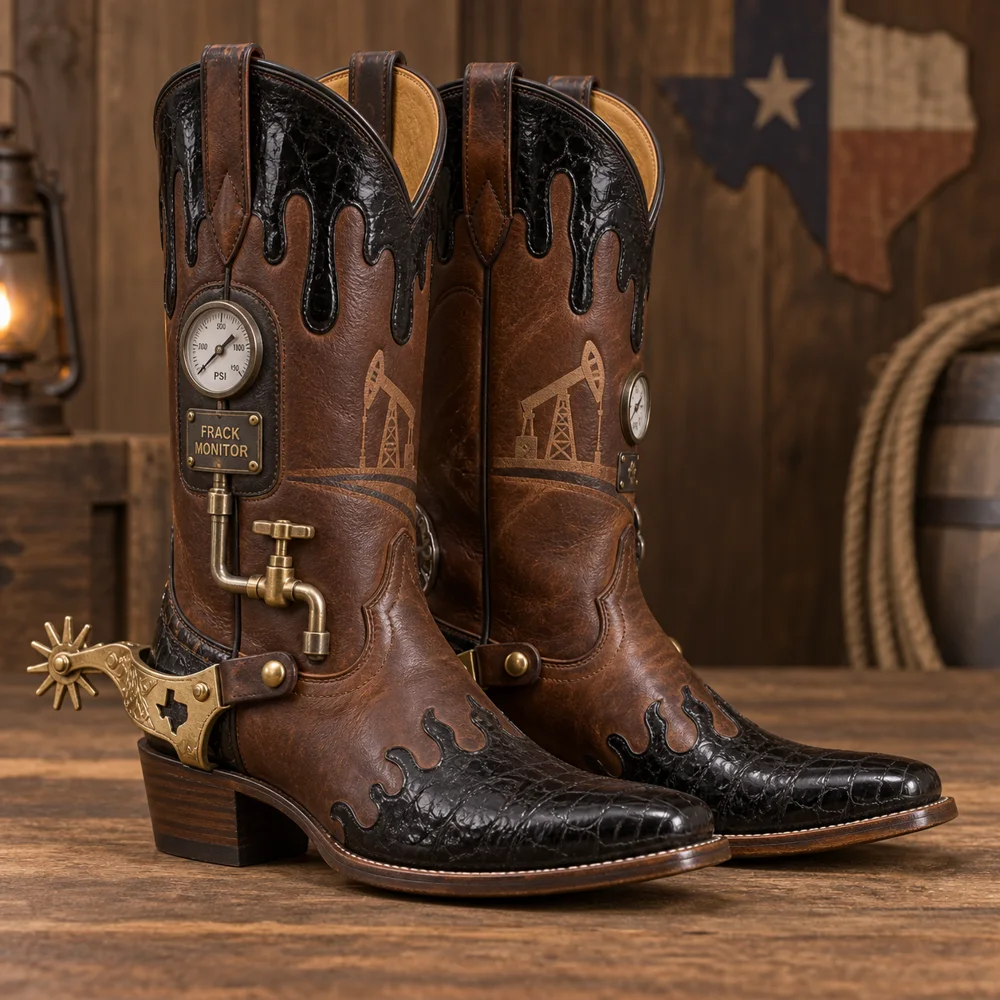
A boot is not improved by every liquid available in a Texas garage. This became our written policy after Buck tried to “season” the first prototype. The boot developed a smoky finish and the insurer developed a new exclusion.
For real footwear, identify the material and follow its maker's care directions. Smooth leather, suede, nubuck, exotic skins and synthetic materials do not all want the same products. Our care department's motto is “read the label before the apology.”
1. Remove dirt before adding ambition.
Brush away loose dirt with a suitable soft brush or cloth. For cleaning, use a product and method appropriate to the material. Do not soak a boot unnecessarily. Mud is not a protective heritage coating, even if it came from a very patriotic ditch.
Clean the sole as needed and look for damage. If you find a loose heel, failing sole or stitching problem, ask a qualified repairer about it. The repair strategy “more confidence” has not performed well in field trials.
2. Let wet boots dry naturally.
Allow wet footwear to dry with ventilation, away from direct heaters and excessive heat. Follow the manufacturer's drying guidance. Do not use an oven, campfire or Bootzilla's heel grill. Leather does not need to reach brisket temperature.
Remove insoles when appropriate for the product and let them dry too. A boot may look dry outside while remaining unpleasant inside. Buck calls that a metaphor for entrepreneurship.
3. Condition the right material with the right product.
Use conditioner only when suitable for your boot's material and finish, according to the maker's directions. Test a recommended product in an inconspicuous spot if needed. Some products can change color or appearance.
More is not automatically better. A boot should not leave a slick on the driveway. Crude oil, bacon grease and the mystery bottle labeled “shop juice” are not approved substitutes for proper leather care.
4. Treat specialty finishes like specialty finishes.
Use suede or nubuck tools and products when those materials call for them. Do not automatically apply smooth-leather polish to every finish. Embroidery, decorative hardware and unusual materials may need separate care. The correct tool is frequently reading, which disappoints our power-tool division.
5. Store the boot, not the swamp.
Put away clean, dry footwear with suitable support so it can retain its shape. Keep it away from excessive heat and damp storage. Give frequently worn boots time to air out. A boot tree is not a tree you plant in the boot, despite the Bluebonnet team's promotional literature.
Bootzilla-specific nonsense to disregard.
- Oil Baron: do not connect any boot to a pipeline. The gauge is a joke, not an invitation.
- Thigh Highs: a flag is decorative. Do not use it to hoist the footwear into storage.
- Blitzers: the flowers do not require oil baths. The grill is imaginary. Feed yourself somewhere else.
If your actual boots came with different care directions, those directions take priority. This page's jokes are not a license to turn a shoe into a chemistry experiment.
