
Start with how you dress
The collar is most visible when your jacket is on, so choose for your usual neckline. Think about ties, top-button comfort, and whether the shirt will spend its life under a blazer or next to a coffee machine. A good collar should sit around your neck without pinching or gaping when buttoned. No amount of prestige stitching can rescue a neck number you guessed in the car.
Regular point
Its points angle downward with a narrower opening. This is the versatile default for someone who wants one shirt to survive both a client meeting and the follow-up meeting about whether the first meeting was productive. It works with many ties and looks conventional open at the neck.
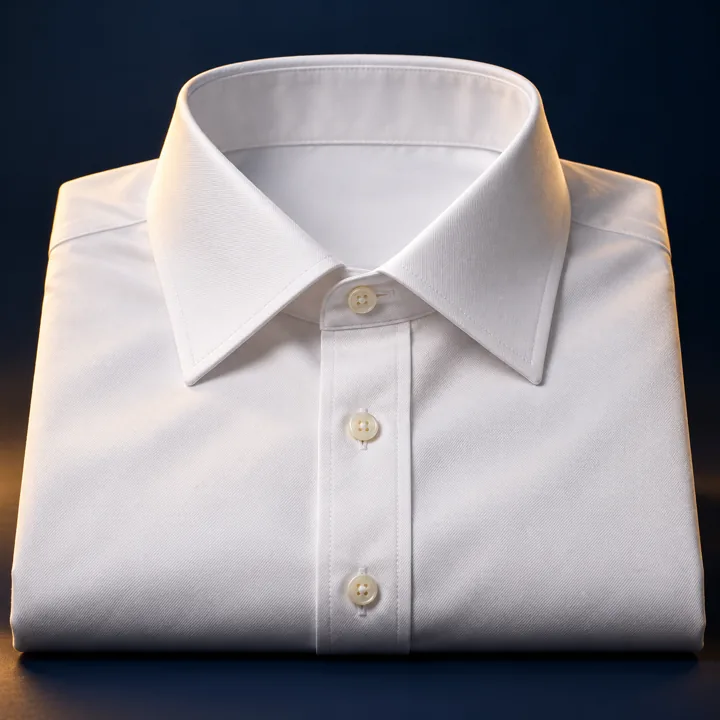
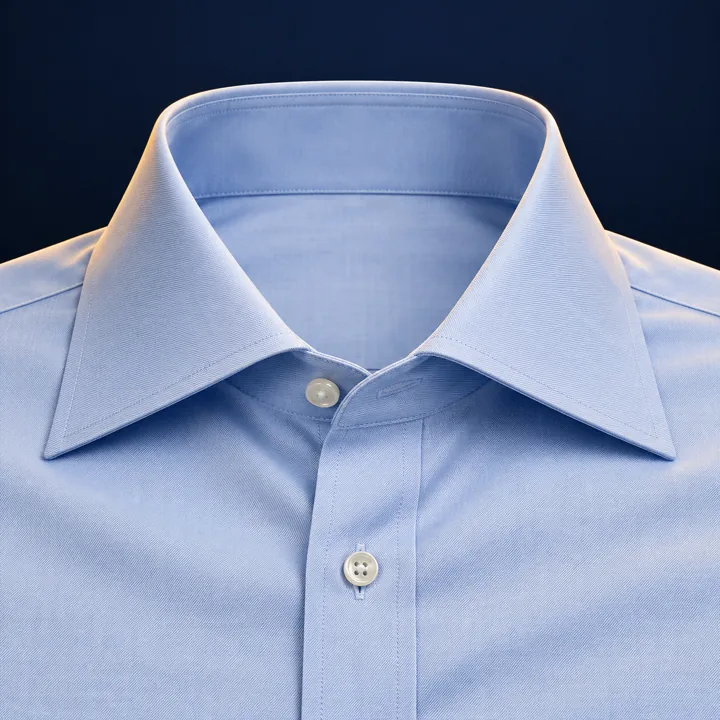
Spread
Its points sit farther apart and leave more room for a tie knot. It often reads more formal, especially under a jacket. You can wear it open, but the open neckline makes a stronger visual statement. That statement may simply be “I own a mirror and have consulted it.”
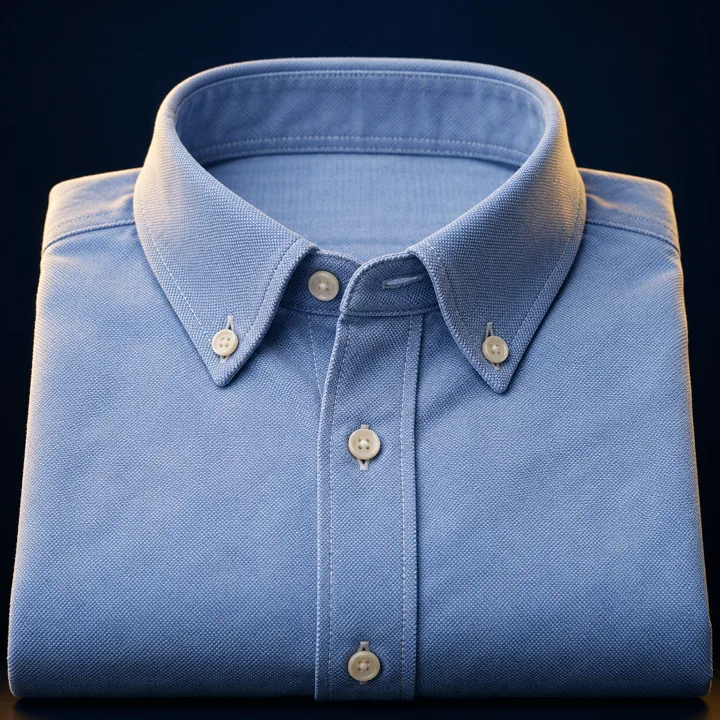
Button-down
Small buttons secure the collar points to the shirt. It generally suits an Oxford shirt and relaxed business dress. It is a practical choice if your collar points tend to wander through the day like middle managers looking for a calendar invite.
Fit still outranks style
Choose the shape you like, then make sure the neck measurement is right. Collar size is about circumference; collar style is about appearance. If the button only closes while you hold your breath, a different collar style is not a medical solution. See the measuring guide before entering a number into our pretend form.
Return to the shirt form. Bring your measurements and an amount of self-awareness your tape can verify.