
First, get the sleeve right
When your arms hang naturally, the cuff should reach around the wrist bone. With a jacket, a modest bit of shirt cuff can show. If your cuff is halfway up your forearm, the issue is sleeve length, not an exciting new movement in tailoring. Our sleeve field starts at the shoulder point; real makers may define their measurement differently.
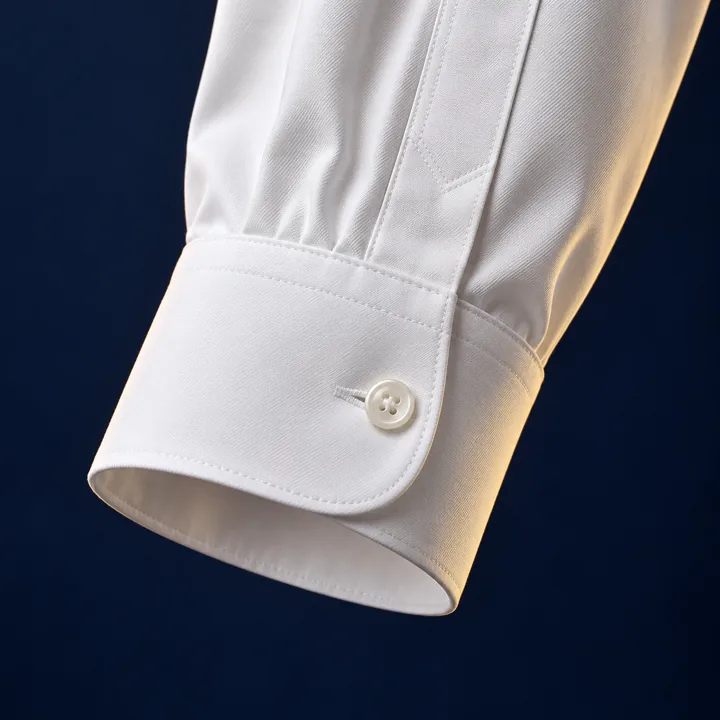
Barrel cuff
A simple cuff that closes with a button. It is easy to wear and usually the most sensible option for daily use. The single button in our photo carries exactly the amount of ceremony most people can manage before coffee.
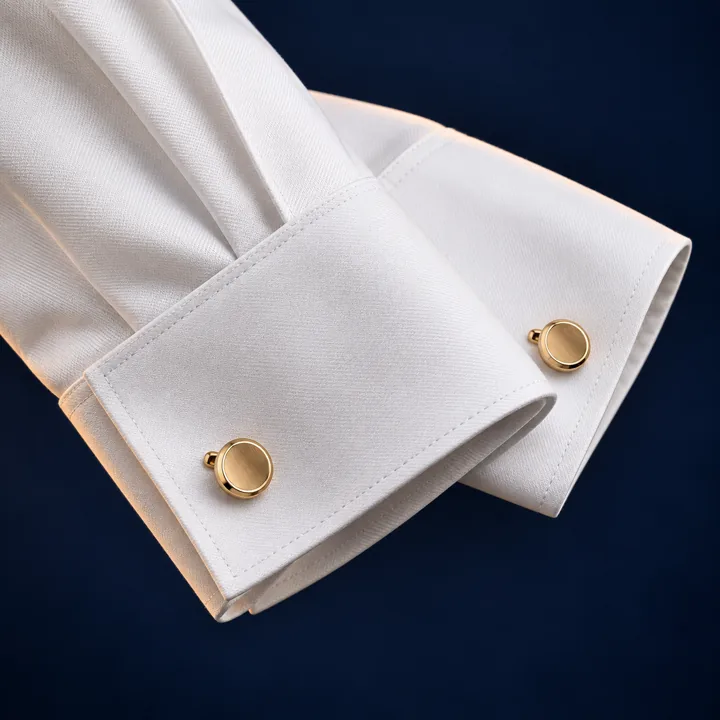
French cuff
This longer cuff folds back and closes with cufflinks. It dresses up a shirt and gives you two small objects to lose the morning of a wedding. Choose it when the event calls for the formality or you sincerely enjoy cufflinks, not because a search result used the word “executive.”
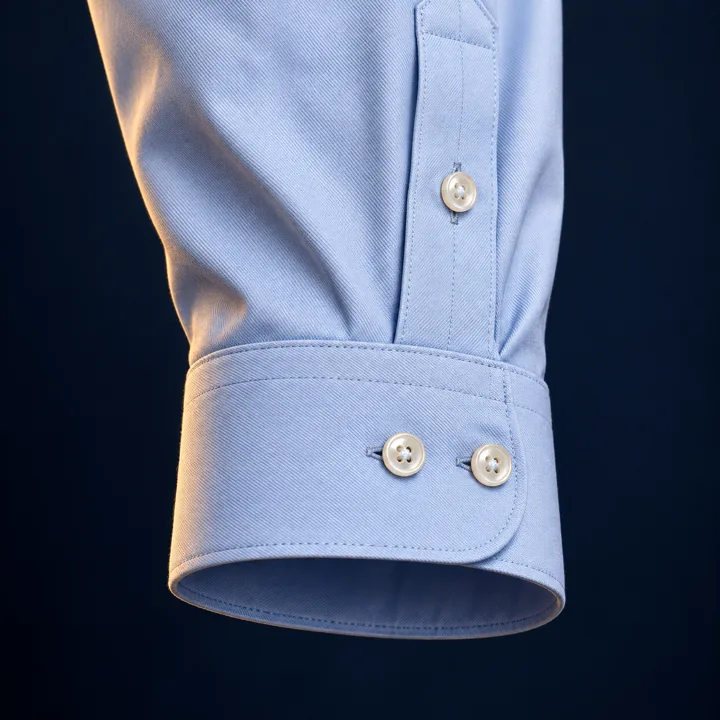
Adjustable button cuff
Two button positions offer a little choice at the wrist. They cannot compensate for a sleeve several inches too long or a measurement taken while your arm was doing interpretive dance. Pick the comfortable closure that does not bunch the sleeve.
The actual decision
For regular wear, start with a barrel or adjustable button cuff. For a dressier outfit with cufflinks, pick French. If you work with gloves, equipment or tight sleeves, consider what will catch or bunch before choosing. This is general style guidance attached to a fictional shirt shop, not a working order form.
Return to the shirt form. Bring your measurements and an amount of self-awareness your tape can verify.